


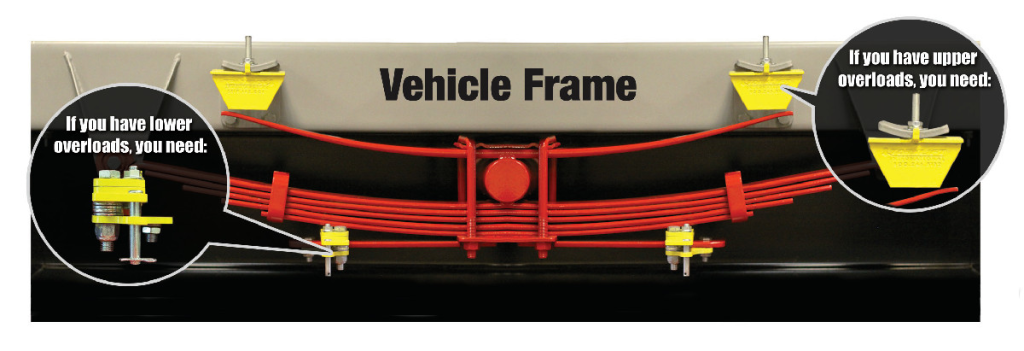
Adding a truck camper changes the way your truck rides and handles. Rear sag, reduced steering, and increased sway are common when the vehicle is carrying a heavy camper. StableLoads from Torklift are a proven way to restore suspension geometry, reduce sag, and dramatically improve handling. But which StableLoad is right for your truck camper setup — lower or upper? This guide breaks down the differences, the tradeoffs, and clear recommendations so you can choose with confidence.
Why truck campers need additional load support
- Truck campers concentrate significant weight over the rear axle. That compresses the leaf springs, causes rear-end sag, and raises the front end.
- Sag alters steering geometry and nose weight distribution, which can reduce braking and steering responsiveness.
- Compressed springs offer less suspension travel for bumps, so impacts transfer to the cab and trailer, and sway from crosswinds or passing vehicles becomes more pronounced.
- Proper load support restores ride height, improves suspension articulation, and reduces sway by pre-loading the springs so the setup reacts more predictably.
What StableLoads do
StableLoads are spring pre-activators for leaf-spring trucks. They apply a controlled preload to the leaf springs so the suspension starts in a more supportive position, even before heavy loads are applied. Benefits include:
- Reduced rear sag and restored front end geometry
- Better braking and steering response
- Less body roll and sway while towing or carrying a camper
- Increased usable leaf spring capacity without changing springs
Lower StableLoads vs Upper StableLoads
Both products deliver the same core function: preloading your leaf springs. The difference is where and how they mount. That change affects installation, fitment, clearance, and sometimes the final ride characteristics.
Quick side-by-side comparison
| Feature | Lower StableLoads | Upper StableLoads |
|---|---|---|
| Mount location | Lower overload spring | Upper overload spring |
| Installation complexity | DIY and often no drill | Easy, DIY with no drilling |
| Adjustability | Can be engaged when truck is hauling a load or disengaged when not loaded | Not adjustable |
| Best for | Primary load support | Secondary load support |
| Ride and handling | Restores ride height and reduces sway effectively | Same core benefits |
| Compatibility notes | Fit varies by truck year and model; check fit guide | Fit varies by truck year and model; check fit guide |
Key factors to consider when choosing
- Camper weight and distribution. Heavier truck campers benefit most from the greatest preload capacity. Both units help, but installation location and adjustability can affect the final result.
- Aftermarket suspension components. Lift blocks, thicker leaf packs, or special axle brackets can affect which style fits without modification. Always check compatibility.
- Off-road use and ground clearance. If you frequently run rough trails, consider how the device affects underbody clearance. Upper mounting often keeps the device away from rocks and debris.
- Daily driving and towing habits. If you frequently tow or switch between payloads, consider how adjustable you want the support to be.
Which option is best for truck campers — practical recommendations
- Most truck camper owners: Lower StableLoads are often preferred where fitment allows. They provide robust preload and excellent reduction in sag and sway for static camper loads and have the ability to be disengaged when not in use.
- Trucks with upper overload spring: Upper StableLoads are an excellent alternative. They offer the same functional benefit while clearing tight spaces and aftermarket components.
- Lifted trucks or those with large aftermarket leaf kits: Check fitment carefully. Upper StableLoads may avoid interference with lift blocks or extended shackles.
- Off-road campers who need maximum ground clearance: Upper mounting can reduce the risk of impact with rocks or trail obstacles.
- Owners who also tow a trailer frequently: Both options will help, but select the one that best maintains suspension geometry for both camper and trailer loads. If you alternate between heavy camper and heavy trailer, consult an expert for tuning and placement.
Installation and maintenance overview
- Installation: Both lower and upper units install to the leaf spring assembly. Specific steps depend on vehicle year, make, and model. Most installations are a DIY, no-drill. On some applications it is required to drill into the leaf spring.
- Adjustment: Lower StableLoads are adjustable so you can set the preload to match your camper weight and driving preference.
- Maintenance: Periodic inspection for tightness and corrosion prevention are recommended. StableLoads are built for long-term use, but checking hardware and lubrication points keeps them operating smoothly.
- Safety: Installing StableLoads does not change your truck’s GVWR or maximum payload. Always stay within manufacturer ratings and calculate tongue weight properly for truck campers.
Performance you can expect
- Dramatic reduction in rear sag when parked and driving, restoring front axle load and steering geometry.
- Noticeable reduction in sway and roll while towing or in crosswind conditions.
- Improved braking feel and reduced braking distances due to more even load distribution.
- Better tire wear and improved overall control, especially at highway speeds.
Warranty and 90-Day Guarantee
- Torklift products are backed by Legendary Lifetime Warranty.
- StableLoads come with a 90-Day Guarantee. Not happy with the change in your ride? Contact us before 90 days use for a refund.
Frequently Asked Questions
Q: What exactly do StableLoads do for a truck camper?
A: StableLoads preload the leaf springs so the suspension begins from a more supportive position. That reduces rear sag, restores front-end geometry, improves steering and braking, and reduces sway and body roll when carrying a truck camper.
Q: Will StableLoads replace airbags or upgraded springs?
A: StableLoads are a complementary solution. They increase the effective support of your existing leaf springs by preloading them. Depending on your camper weight and goals, you may still choose airbags or spring upgrades for additional capacity or ride tuning.
Q: Do Lower and Upper StableLoads provide different levels of performance?
A: Functionally they provide the same preload benefit. Differences are primarily in fitment, clearance, and installation preference. Performance in ride and sway reduction will be similar when properly installed and adjusted.
Q: Are StableLoads adjustable while the camper is installed?
A: Yes. Lower StableLoads are adjustable so you can set preload to match your load.
Q: Will installing StableLoads affect my truck’s towing or payload capacities?
A: No. StableLoads do not change the manufacturer-rated GVWR or payload capacities. They improve how your suspension behaves under load. Always stay within your truck’s rated limits and properly calculate tongue weight.
Q: Can I install StableLoads myself?
A: Many owners successfully install StableLoads themselves. If you are unsure or uncomfortable, use a qualified installer.
Q: Where can I get help choosing the right StableLoads?
A: Contact an authorized Torklift dealer or use the Torklift fit guide and product resources. Dealers can verify fitment and advise on installation or optional supporting upgrades.