


Vehicle manufacturers do not design occupant protection around a 2.5 mph component. Here is why.
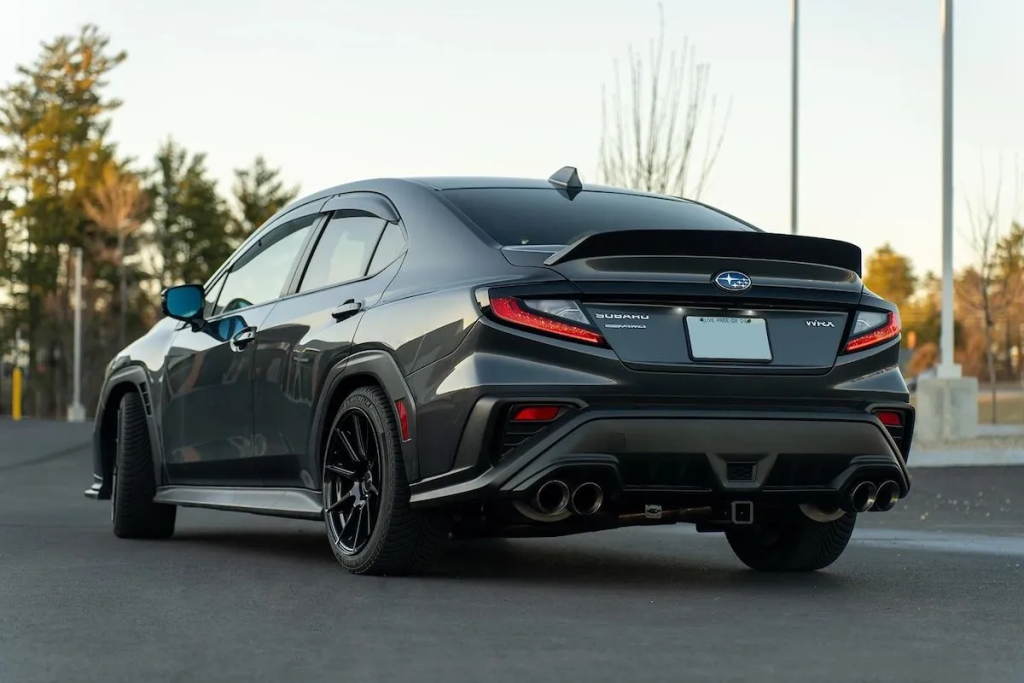
If the rear bumper beam were truly critical to passenger safety, vehicle manufacturers would have designed the entire rear crash structure around it. They would not test it at 2.5 mph. They would not allow trailer hitches to be installed on their vehicles. And NHTSA would not specify that trailer hitches are removed before the bumper test.
The fact that the bumper standard tests at walking speed, that the regulation explicitly accommodates trailer hitches, and that millions of vehicles drive with hitches installed in place of the original beam tells you where the beam sits in the vehicle's safety hierarchy: it manages property damage, not occupant protection.
How Vehicle Manufacturers Think About Rear-End Safety
Vehicle manufacturers design rear crash safety around the vehicle's structure, not around the bumper beam. The crumple zones, frame rails, floor pan, cabin cage, B-pillars, C-pillars, and roof structure are all engineered to manage collision energy at speeds of 30, 35, 40 mph and higher. These components are designed to work together as a system, and that system does not depend on a thin beam that sits at the very back of the vehicle and is tested at 2.5 mph.
If you removed every safety component from a vehicle and left only the bumper beam, the vehicle would have no crash protection. If you removed only the bumper beam and left everything else, the vehicle's occupant protection would be unchanged. That is how far apart these two systems are in the engineering hierarchy.
Why NHTSA Removes the Hitch Before Testing the Bumper
The federal bumper test procedure specifies that trailer hitches are removed before the test. The regulation was written to accommodate hitches. Federal law explicitly states that bumper standards should not, to the greatest practicable extent, preclude the attachment of a detachable hitch. If the bumper beam were essential to occupant safety, the government would not have written rules that explicitly allow it to be displaced by a hitch.
Why Millions of Vehicles Drive with the Beam Replaced by a Hitch
Trailer hitches are among the most common aftermarket vehicle accessories. They are installed by dealerships, national chains, fleet operators, and independent shops on millions of vehicles. Many of these installations require removing or replacing the original bumper reinforcement beam. This has been standard practice for decades, and it has not produced a safety crisis. The reason is straightforward: the beam's function (low-speed damage resistance) is separate from the vehicle's crash safety systems.
What Happens in a Real Rear-End Collision With a Hitch Installed
In a real rear-end collision, the hitch structure may absorb some initial contact before the vehicle's rear crumple zone begins to deform. Once the crumple zone engages, it absorbs and manages energy the same way it would without the hitch. The cabin structure resists collapse. The seatbelts, head restraints, and airbags protect the occupants. The sequence of occupant protection is the same.
The hitch does not improve crash safety. But its presence in the space where the bumper beam was does not compromise the vehicle's structural ability to protect passengers. The crumple zone behind and around the cabin still functions as designed.
The Real-World Safety Picture
| Concern | Reality | Why |
| "Removing the beam makes the vehicle unsafe." | Occupant safety systems are not dependent on the bumper beam. | Crumple zones, frame, cabin, seatbelts, and airbags are intact. |
| "The beam absorbs crash energy." | At 2.5 mph, not at collision speeds. Real energy management is done by the vehicle structure. | The beam is overwhelmed instantly in any real collision. |
| "My car will crumple more without it." | The crumple zone is the vehicle body structure. The beam is not the crumple zone. | The crumple zone begins behind the bumper area and extends forward around the cabin. |
| "No one should remove the beam." | Millions of vehicles operate with the beam replaced by a hitch. It is standard practice. | NHTSA accommodates hitches in the bumper regulation. Federal law says bumper standards should not preclude hitch attachment. |
Key Takeaways
- Vehicle manufacturers design crash safety around the vehicle structure, not around a 2.5 mph bumper beam.
- NHTSA removes hitches before the bumper test and the regulation explicitly accommodates hitch installation.
- Millions of vehicles operate with the beam replaced by a hitch. It is standard practice.
- In a real collision, the occupant protection sequence (crumple zones, frame, cabin, seatbelts, airbags) is unchanged.
- The hitch does not improve crash safety, but its presence does not compromise the systems that protect passengers.
Check fitment for your vehicle.
Frequently Asked Questions
Would crash safety depend on a part tested at 2.5 mph?
No. Vehicle manufacturers design occupant protection around crumple zones, frame rails, cabin structure, seatbelts, and airbags, not around a low-speed damage-resistance beam.
Why does NHTSA remove the hitch before bumper testing?
Because the regulation was written to accommodate trailer hitches. Federal law says bumper standards should not preclude hitch attachment.
Do millions of vehicles drive without the original beam?
Yes. Trailer hitches that replace or displace the bumper beam are installed on millions of vehicles by dealers, shops, and fleet operators.
What happens in a real collision with a hitch installed?
The vehicle's crumple zones, frame, cabin, seatbelts, and airbags protect occupants the same way they would without the hitch. The occupant protection path is unchanged.
***IMPORTANT NOTICE
While EcoHitch trailer hitches are built with high-strength materials and tested for exceptional weight ratings, your vehicle's factory towing capacities are the ultimate limit. Always refer to your vehicle's owner's manual to determine its maximum towing and tongue weight ratings. No aftermarket hitch or accessory can increase your vehicle's factory-rated towing capacities.
Using hauling accessories like extensions, cargo trays, bike racks, or other accessories that extend the load out from the trailer hitch, will significantly reduce the tongue weight capacity of your hitch system.
To estimate how your setup will affect tongue weight, we recommend using our Maximum Hitch Weight (Tongue Weight) Estimator before hauling your payload (cargo trays, bike racks, etc.)
Disclaimer: It is the user's responsibility to ensure safe towing practices and to confirm that all loads fall within the limits of the lowest-rated component in the towing system. Torklift is not liable for any damage or injury resulting from the misuse or overloading of towing/hauling equipment.